
Florida Insurance Inspection Requirements Explained
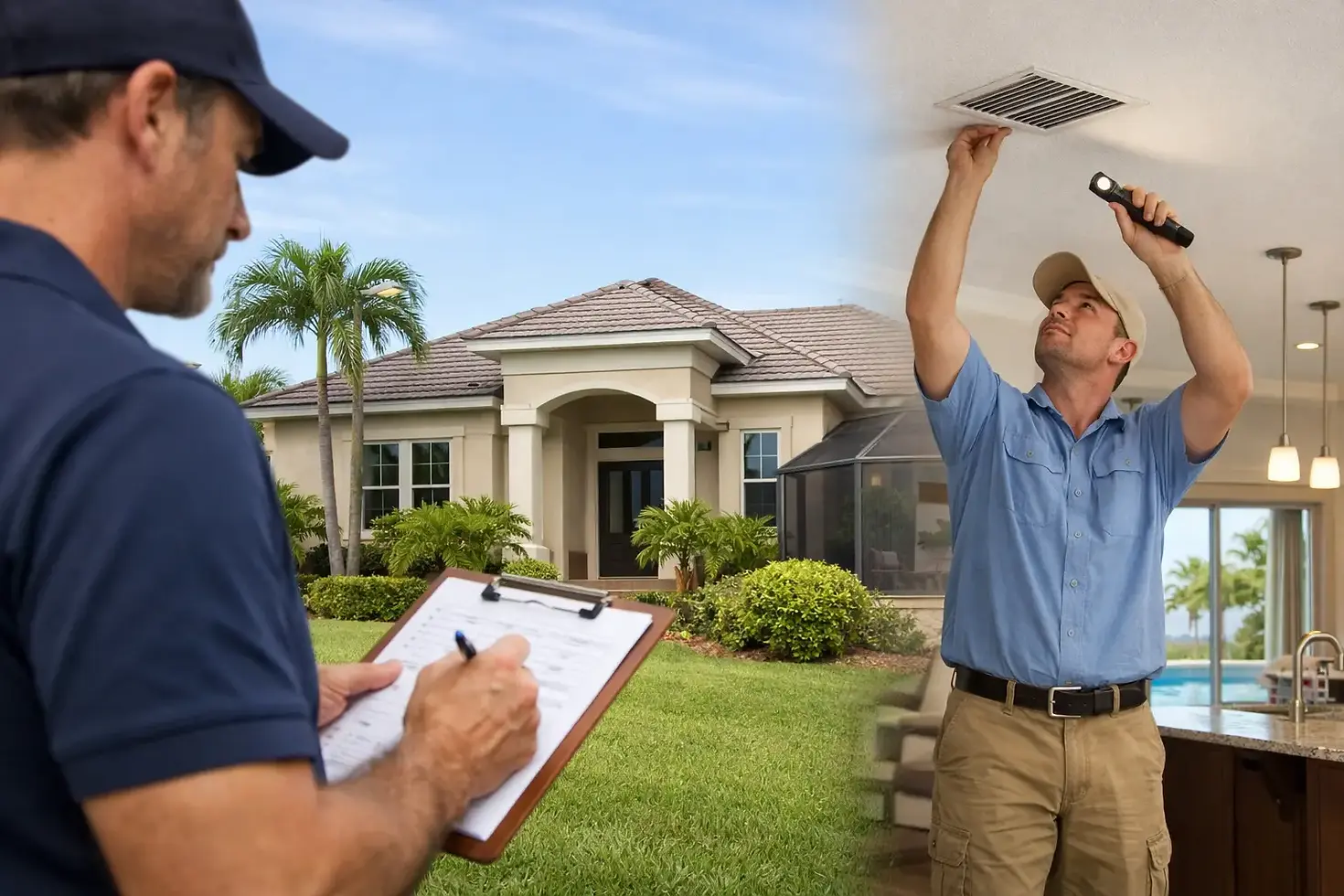
A home can look well maintained and still raise insurance questions because the details that matter to an underwriter are often behind a panel, above the ceiling, or on the roof. In Southwest Florida, Florida insurance inspection requirements commonly come into focus when buying a home, changing carriers, renewing a policy, or responding to an insurer’s request for updated documentation.
The key point for homeowners is simple: there is not one universal inspection every Florida property must complete at all times. Requirements depend on the insurance company, the home’s age, its construction, prior inspection reports, roof condition, and the coverage being requested. Two inspections appear most often: the 4-point inspection and the wind mitigation inspection.
A clear, current report gives your insurance agent and carrier the information they need to evaluate the property. It can also help you understand property conditions before they become a surprise during a transaction or renewal.
What Florida Insurance Inspection Requirements Usually Include
Insurance inspections are narrower than a full residential home inspection. Their purpose is to document specific systems and construction features that influence insurance eligibility, coverage decisions, and potential premium credits.
A full home inspection is still valuable for a buyer or homeowner because it evaluates the property more broadly. An insurance inspection, however, is usually focused on underwriting questions. The insurer may ask for a particular form, photographs, or documentation within a stated deadline.
The 4-Point Inspection
A 4-point inspection reviews four major areas of the home: the roof, electrical system, plumbing system, and heating and cooling system. Insurance companies frequently request this inspection for older homes, although each carrier sets its own underwriting guidelines.
The inspection records the visible condition, age, and general type of these systems. It is not a code inspection, a warranty, or a prediction of remaining service life. It is a factual snapshot based on conditions visible and accessible on the day of the inspection.
For the roof, insurers typically want to know the covering material, apparent condition, age when documentation is available, and whether there are visible signs of damage or active moisture intrusion. A roof near the end of its expected service life may prompt additional questions from the carrier, even if it is not currently leaking.
Electrical documentation may include the panel manufacturer, wiring type, visible conditions at accessible components, and whether the system shows concerns that insurers commonly flag. The plumbing portion generally identifies supply and drain materials, water heater information, and visible leaks or deterioration. Heating and cooling observations focus on the presence, type, and visible condition of the system.
Because insurance carriers apply their own standards, a report that documents an older component does not automatically mean coverage will be declined. It does mean the carrier has the information needed to make its decision. In some cases, an insurer may request repair documentation, a licensed contractor’s evaluation, or a replacement before issuing or continuing coverage.
The Wind Mitigation Inspection
A wind mitigation inspection documents features that may reduce wind damage during severe weather. Unlike a 4-point inspection, it is often pursued because it may qualify a homeowner for premium credits. Whether credits apply, and how much they may affect a premium, depends on the carrier and policy.
The report typically verifies building features such as the roof shape, roof deck attachment, roof-to-wall connections, opening protection, secondary water resistance, and the opening protection level for windows, exterior doors, garage doors, and other applicable openings.
These details matter in coastal and high-wind areas. A hip roof, stronger roof-to-wall connections, and qualifying opening protection can change how an insurer evaluates wind risk. Still, no inspector can promise a specific discount. The insurance company determines eligibility and calculates any credit after reviewing the completed form.
For homes in Fort Myers, Cape Coral, Naples, Port Charlotte, and nearby Southwest Florida communities, wind mitigation documentation can be particularly relevant due to hurricane exposure. A current report is often worth having even when an insurer has not specifically requested one, especially if the home has had a roof replacement, new impact-rated openings, or other qualifying updates.
When an Insurer May Request an Inspection
Insurance requirements often appear at predictable points in homeownership. A buyer may need reports while obtaining a new policy before closing. A homeowner changing carriers may be asked for updated documents during the application process. Current policyholders may also receive a request before renewal, particularly when the home is older or the carrier needs clarification about a major system.
An insurer may request a new inspection after a roof replacement, substantial renovation, storm-related repair, or a significant change in coverage. Previous reports can be useful, but carriers may set limits on how old a report can be. A report accepted by one insurer is not guaranteed to satisfy another.
If you receive a request from your carrier, read it closely. Confirm the exact inspection type, the form requested, whether photographs are required, and the submission deadline. Your agent can often clarify what the underwriter needs, while a qualified inspector can explain what the inspection does and does not cover.
What Inspectors Can and Cannot Determine
A dependable insurance inspection should be thorough, clearly documented, and supported with photographs. It should identify visible conditions without overstating them. The report is meant to give the insurer usable information, not to create unnecessary alarm.
At the same time, an inspection cannot see through walls, confirm the quality of concealed work, or guarantee future performance. Roof access, attic access, panel access, weather, safety conditions, and the home’s layout can affect what can be observed. If an area is inaccessible or a condition needs further evaluation, the report should say so plainly.
This is why experience and reporting quality matter. A vague report can create delays and follow-up questions. A detailed report with clear photos and accurate descriptions helps keep the process moving and gives homeowners a more reliable record of the property’s current condition.
How to Prepare for a 4-Point or Wind Mitigation Inspection
Preparation is straightforward and can help prevent delays. Make sure the inspector can safely access the electrical panel, water heater, heating and cooling equipment, attic entry, and exterior of the home. If gates are locked or equipment is located in a closet, garage, or storage area, clear a path beforehand.
Gather permits, invoices, warranty information, and product documentation for major upgrades if you have them. Roof permits, documentation for replacement windows or doors, and records related to roof attachments can be helpful during a wind mitigation inspection. The inspector still must verify applicable features, but supporting records can help establish dates and details that are not visible.
Do not make assumptions based on a neighbor’s premium or a contractor’s verbal estimate. Similar homes can receive different underwriting decisions due to carrier guidelines, policy choices, claims history, location, and the documentation available.
Why a Full Home Inspection Still Matters
A 4-point inspection answers insurance-focused questions. It does not replace the broader evaluation needed when purchasing a property, preparing to sell, or assessing a home after major weather events.
A comprehensive inspection examines many more accessible components and can provide useful context around maintenance needs, moisture concerns, exterior conditions, and visible performance issues. At West Coast Home Inspection, detailed reporting and advanced tools such as thermal imaging, moisture detection, and drone-mounted cameras support a more complete understanding of the property when conditions allow.
For a buyer, that broader perspective can support better decisions before the end of the inspection period. For a seller or current homeowner, it can provide time to address concerns before an insurance request or buyer inspection introduces pressure into the process.
Common Questions About Florida Insurance Inspections
Is a wind mitigation inspection required in Florida?
Not universally. Many homeowners choose one because documented wind-resistant features may qualify for insurance credits. Your insurer or agent can confirm whether it is requested for your policy and whether an existing report is still acceptable.
Does a 4-point inspection mean something is wrong with my home?
No. A 4-point inspection is commonly an underwriting requirement, especially for older properties. It documents the visible condition and characteristics of four major systems so the insurance company can evaluate the risk.
How long does an insurance inspection report remain valid?
That depends on the insurance carrier and the type of report. Ask your agent what report age is acceptable before relying on a previous inspection. A new roof or other major update may also make a new report worthwhile.
When an insurance request arrives, prompt action and accurate documentation are usually the best path forward. A careful inspection gives you a clear record of what the home has today, so you can respond to your insurer with confidence and make practical decisions for the property you own.


Comments