
Top Defects in Older Florida Homes to Watch For

A well-kept older home can offer character, established landscaping, and a desirable Southwest Florida location. It can also carry repairs that are easy to miss during a showing. The top defects in older Florida homes are often tied to decades of heat, humidity, storms, salt air, and changing building standards. A thorough inspection gives buyers a clearer picture of the home’s condition before the transaction moves forward.
Age alone does not make a property a poor purchase. Many older homes have been carefully maintained and thoughtfully updated. The real question is whether major systems have been repaired, replaced, or modified correctly - and whether hidden conditions could create unexpected costs after closing.
Why Older Florida Homes Need a Closer Look
Florida homes work harder than homes in many other parts of the country. Roofs endure intense sun and wind-driven rain. Air conditioning systems run for long stretches of the year. Moisture can enter through small openings and remain concealed behind finishes, beneath flooring, or around exterior penetrations.
Older construction may also predate current expectations for hurricane protection, electrical capacity, ventilation, and drainage. Updates can add value, but they should be evaluated as part of the whole house. A newer kitchen does not necessarily mean the wiring behind the walls, the plumbing below the cabinets, or the roof above the ceiling has been addressed.
Top Defects in Older Florida Homes
Aging roofs and vulnerable roof details
Roof condition is one of the most consequential issues in an older Florida home. Even when shingles, tile, or metal panels appear acceptable from the ground, the roof may have aged flashing, deteriorated sealants, damaged fasteners, worn underlayment, or previous patch repairs. These details matter because water does not need a large opening to enter a home.
Signs of past leakage may appear as staining on ceilings, deteriorated sheathing visible from the attic, or moisture readings around roof penetrations. A roof can be near the end of its practical service life without actively leaking on inspection day. That distinction matters for buyers budgeting for ownership and for owners preparing insurance documentation.
Wind mitigation features should also be considered. Roof-to-wall connections, opening protection, roof shape, and the age and condition of the roof covering can affect how a home performs in severe weather and may be relevant to insurance requirements.
Electrical systems that no longer match modern use
Electrical defects are common in homes built before today’s household power demands. Older panels, breakers, wiring methods, ungrounded receptacles, double-tapped breakers, missing safety devices, and improvised additions can all warrant further evaluation.
A home may have outlets that work during a brief walkthrough yet still have concerns at the panel or within branch circuits. Renovations are a frequent source of questions. When additions, garages, patios, or kitchens were updated over time, the electrical work may not be consistent throughout the property.
Inspectors look for visible conditions that affect safety and function, including panel condition, accessible wiring, outlets, switches, and electrical components. If a condition requires repair or additional assessment, a qualified electrical contractor can determine the proper scope of work.
Moisture intrusion and concealed deterioration
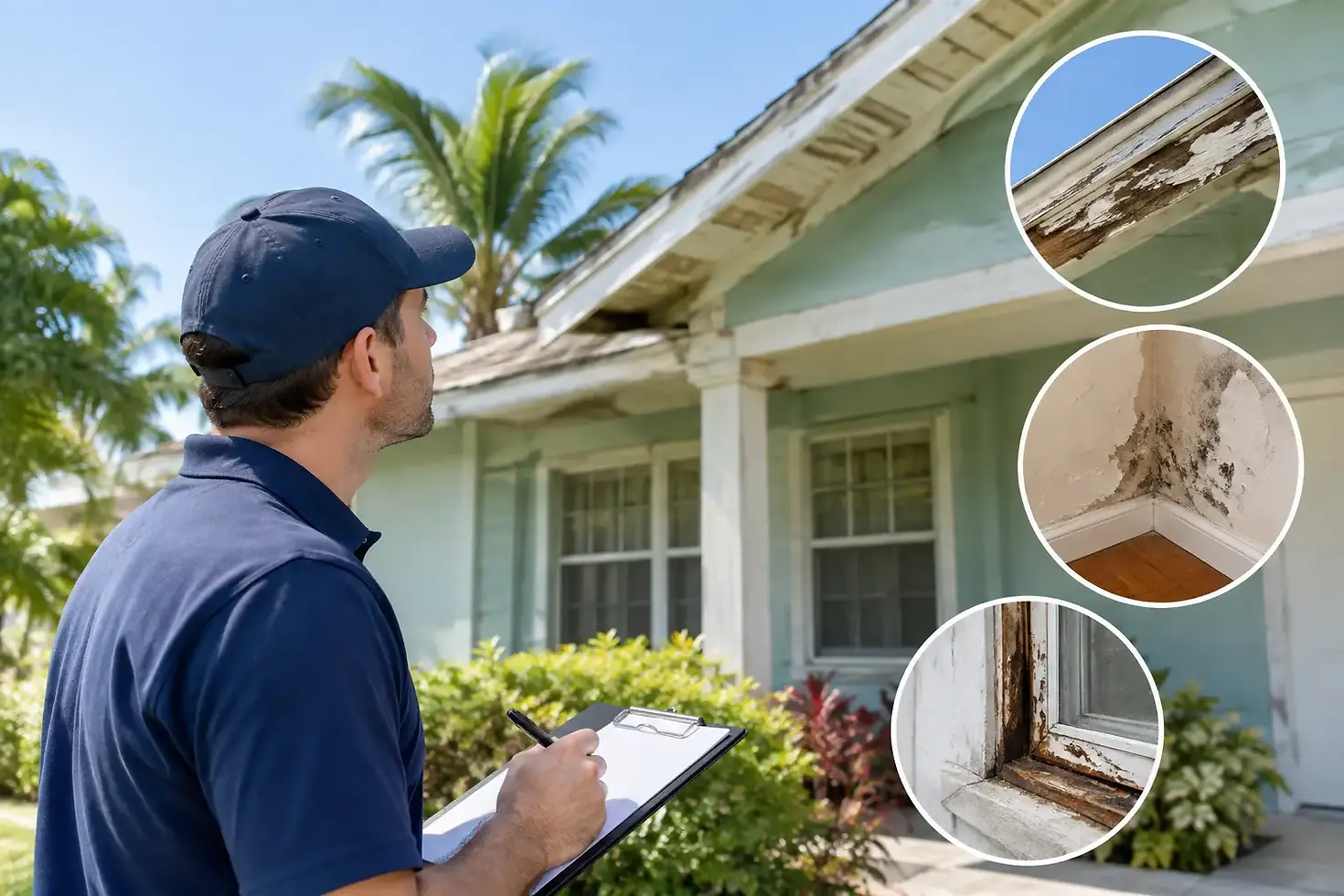
In Southwest Florida, moisture is not a minor maintenance issue. It can enter through roofs, windows, exterior doors, plumbing connections, wall penetrations, and poorly drained areas around the structure. Over time, repeated moisture exposure can damage wood framing, trim, drywall, flooring, cabinets, and exterior finishes.
Older homes may have settlement cracks or worn caulking that allow water to enter during heavy rain. Window and door replacements can improve performance, but installation quality is as important as the product itself. Improper flashing, gaps at trim, and unsealed penetrations can create problems that are not obvious from inside the house.
Moisture meters and thermal infrared cameras can help identify areas that deserve closer attention. These tools do not replace visual inspection or invasive testing, but they provide useful information when used with experience and sound judgment.
Plumbing lines, fixtures, and water heaters
Older plumbing systems deserve careful review because supply lines, drain lines, shutoff valves, fixtures, and water heaters all have finite service lives. Corrosion, prior leaks, slow drainage, damaged fittings, and aging water-heating equipment can affect a buyer’s repair budget quickly.
Material type matters, but so does installation quality and maintenance history. A newer fixture may be connected to older piping. A water heater can appear operational while showing corrosion at fittings, inadequate support, or installation concerns. Accessible plumbing should be checked for leakage, deterioration, and signs of prior repairs.
Buyers should also remember that plumbing defects are not always dramatic. A small drip under a sink or at a supply connection can cause cabinet damage and concealed moisture over time. Early identification makes planning easier before a minor repair becomes a larger project.
Air conditioning concerns and duct issues
Air conditioning is essential in Florida, and older homes may have systems that have been replaced more than once. The current equipment’s age, visible condition, cooling performance at the time of inspection, condensate drainage, insulation on accessible refrigerant lines, and duct condition all deserve attention.
An air conditioner that cools during an inspection may still be approaching replacement age or showing maintenance concerns. Condensate drains are particularly important in Florida’s humid climate. Drainage problems can result in water damage near air handlers, especially when equipment is located in a closet, garage, or attic.
Ductwork in older homes may be poorly supported, damaged, disconnected, or inadequately insulated in accessible areas. Those conditions can affect comfort, efficiency, and indoor moisture control. A home inspection identifies visible concerns, while an HVAC professional can provide service recommendations and remaining-life guidance when needed.
Exterior deterioration, drainage, and structure movement
The exterior is the home’s first defense against weather. Stucco cracks, deteriorated fascia, damaged soffits, worn caulking, wood rot, and poorly maintained exterior trim are common concerns in older properties. Some cracks are cosmetic; others may indicate movement, water intrusion, or a need for more detailed evaluation.
Drainage is equally important. Water should move away from the house rather than collect near the foundation or under exterior slabs. Settled walkways, patios, and driveways can direct water toward the structure. In older neighborhoods, landscape changes and additions made over many years can alter how water flows around the home.
A careful inspection distinguishes between normal age-related wear and conditions that may require repair, monitoring, or further assessment. That helps clients prioritize rather than treating every imperfection as a deal-breaker.
What Buyers Should Ask Before Moving Forward
When an older home has been updated, ask for available records on major replacements such as the roof, electrical panel, water heater, air conditioning equipment, windows, and plumbing work. Documentation can provide useful context, though visible condition and proper installation still matter.
It is also wise to consider the total ownership picture. A property may be a strong purchase even if it needs several improvements, provided the price, repair scope, insurance considerations, and timeline make sense for your plans. The purpose of an inspection is not to make the decision for you. It is to replace uncertainty with practical information.
For buyers, sellers, and investors in Fort Myers, Cape Coral, Naples, and surrounding Southwest Florida communities, West Coast Home Inspection provides detailed reporting with photo documentation and advanced tools, including moisture detection, thermal imaging, and drone-mounted cameras when appropriate. The goal is clear communication about the conditions that matter most.
Older Florida homes can be excellent properties when their condition is understood honestly. Give yourself enough time to review the report, ask focused questions, and obtain qualified repair estimates for significant findings. That preparation puts you in a far stronger position to move forward with confidence.


Comments